

Key Takeaways
Where the myth comes from
The belief that healthy food is unaffordable is widespread, and it is not entirely baseless. Organic produce, specialty health foods, and trendy superfoods do carry high price tags. The problem is that these products are not representative of what a nutritious diet actually requires. When families compare a $7 bag of kale chips to a $1.50 bag of frozen spinach, they are comparing the wrong things.
Much of the perception is also driven by where people shop and what they see advertised. Premium grocery chains position health as a luxury. Conventional supermarkets place processed snacks at eye level. Neither environment makes it obvious that a pound of dried lentils, one of the most nutrient-dense foods available, often costs under $2.
The USDA's Thrifty Food Plan, which estimates the cost of a nutritionally adequate diet for families at different income levels, has consistently found that meeting federal dietary guidelines is possible within a constrained budget. The barrier is more often planning and familiarity than price.
Myth
Eating healthy costs significantly more than eating on a tight budget.
Fact
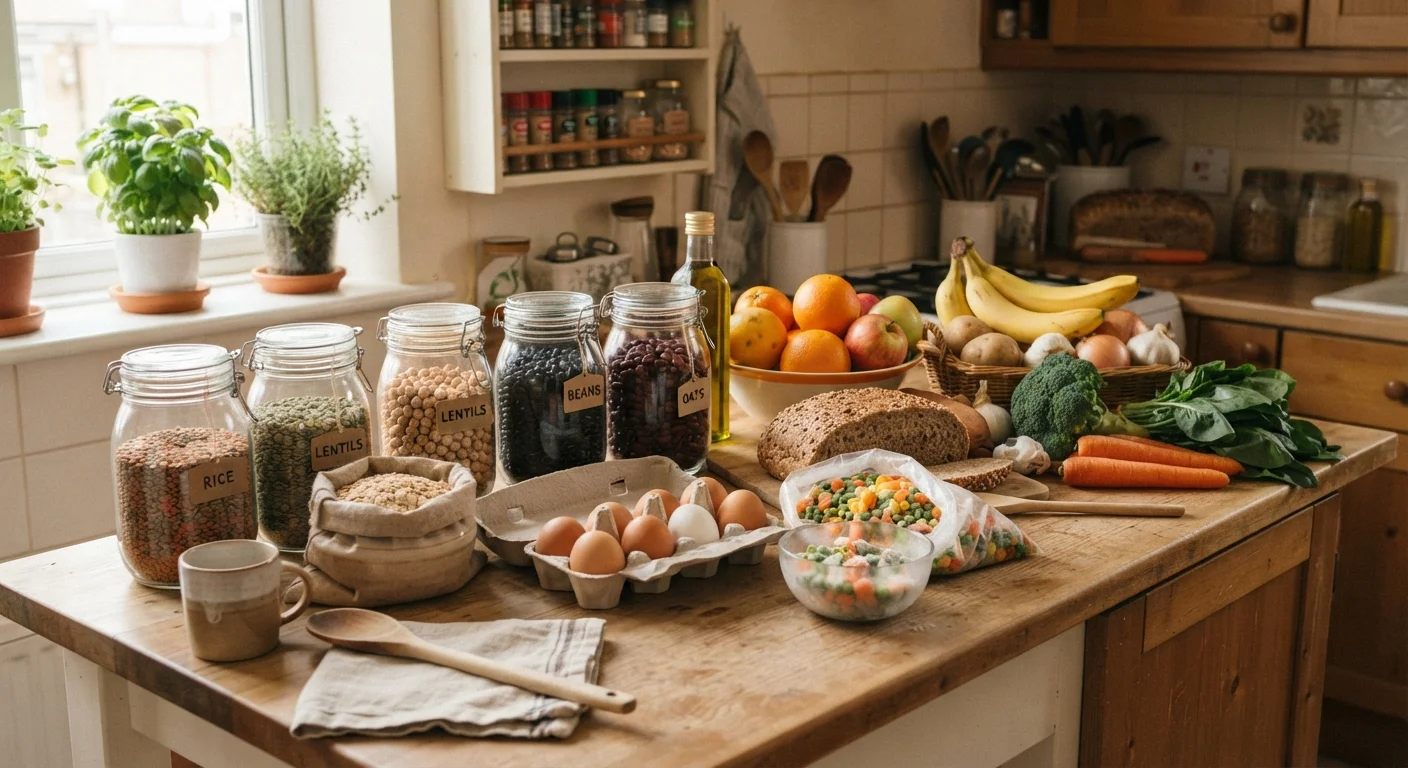
Nutritious staple foods, including dried legumes, oats, eggs, and frozen vegetables, are among the lowest-cost items in any grocery store.
The comparison most people make is between cheap processed food and expensive organic or specialty health products. That is not a fair comparison. Dried beans and lentils typically cost $1 to $2 per pound and provide substantial protein, fiber, and micronutrients per serving. Rolled oats run well under $2 per pound. Eggs remain one of the most affordable complete protein sources available. A diet built around these staples can meet most nutritional needs at a fraction of what many families spend on packaged snacks and convenience meals. See a practical reference for affordable whole foods for cost and nutrient data by food category.
Myth
Fresh vegetables are always better than frozen, so buying frozen means compromising on nutrition.
Fact
Frozen vegetables are nutritionally comparable to fresh, and often cost less, especially for families buying outside of peak growing seasons.
Vegetables destined for freezing are typically processed within hours of harvest, which preserves most water-soluble vitamins. Fresh produce, by contrast, can lose nutrients during days of transit and refrigerated storage. For common vegetables like spinach, peas, and broccoli, the nutritional difference at the point of eating is small. The cost difference, however, can be substantial. Frozen spinach, for example, is generally a fraction of the price of fresh spinach and has a much longer usable life, which also reduces food waste and the money lost to spoilage.
Myth
Protein is one of the most expensive parts of a healthy diet.
Fact
Plant-based proteins like dried beans, lentils, and split peas provide more protein per dollar than most animal products.
A pound of dried lentils yields multiple servings of protein-rich food at a cost well below most meat or poultry options. Eggs are another example: a dozen eggs provides 12 servings of high-quality protein for a cost that remains competitive with almost any other protein source. Families do not need to rely exclusively on plant proteins, but incorporating them regularly can meaningfully lower the weekly food bill. Dried beans and lentils also supply fiber and iron that meat does not, making them a complementary rather than inferior choice.
Myth
Convenience foods are cheaper because they save time, which is worth money.
Fact
Convenience foods generally cost more per serving and deliver less nutritional value than simple home-cooked meals made from basic ingredients.
Time has real value, and some convenience products do save meaningful effort. However, the per-serving cost of packaged meals, frozen entrees, and individually portioned snacks is consistently higher than equivalent home-prepared food. A box of macaroni and cheese costs more per serving than a pot of pasta with canned tomatoes and beans, and the home-cooked version provides more fiber and less sodium. Families balancing cost and time can often find a middle ground: batch cooking on weekends, using a slow cooker, or preparing simple one-pot meals that take under 30 minutes. The approach families use to eat well on a very tight weekly budget relies on exactly these kinds of strategies.
What the numbers actually show
Cost-per-nutrient comparisons tell a different story than sticker prices. Eggs, canned sardines, dried black beans, rolled oats, frozen broccoli, and carrots all rank among the most affordable sources of protein, fiber, vitamins, and minerals available in a standard U.S. grocery store. None of them require a specialty retailer.
A useful comparison: a family spending on individually packaged snack foods, single-serving yogurts, and bottled juice is likely spending more per calorie and per gram of protein than a family buying whole oats, plain yogurt in bulk, and seasonal fruit. The real cost difference between processed convenience foods and home cooking is often larger than families realize, and it runs in the direction most people do not expect.
Frozen vegetables deserve particular attention. Research comparing nutrient content at point of consumption consistently finds that frozen produce retains most of the vitamins present at harvest, because freezing halts the degradation that happens during transport and shelf time. Fresh broccoli sitting in a refrigerator for five days may have fewer nutrients than frozen broccoli cooked immediately. For a more detailed breakdown, see how frozen and fresh produce compare on cost and nutrition.
This article provides general nutrition and budgeting information only and is not medical or financial advice. Consult a qualified healthcare professional before making significant changes to your diet, particularly if you have a health condition.