

Key Takeaways
Why HVAC lifespan depends on small habits
A central heating and cooling system typically lasts 15 to 20 years when maintained, and noticeably less when neglected. The gap is rarely caused by one dramatic failure. It builds through accumulated strain: clogged filters forcing the blower to work harder, dirty coils unable to transfer heat efficiently, and small refrigerant leaks left unaddressed until the compressor fails.
The good news is that most of the habits that extend equipment life cost very little. They require time, not money, and the ones that do have a cost repay themselves in avoided repair bills. As small deferred repairs compound into larger expenses, the same logic applies here: spending $10 on a filter today is much cheaper than spending $800 on a blower motor replacement in three years.
Core maintenance practices that make the biggest difference
The practices below are ranked by impact per dollar spent. None require professional training, except where noted.
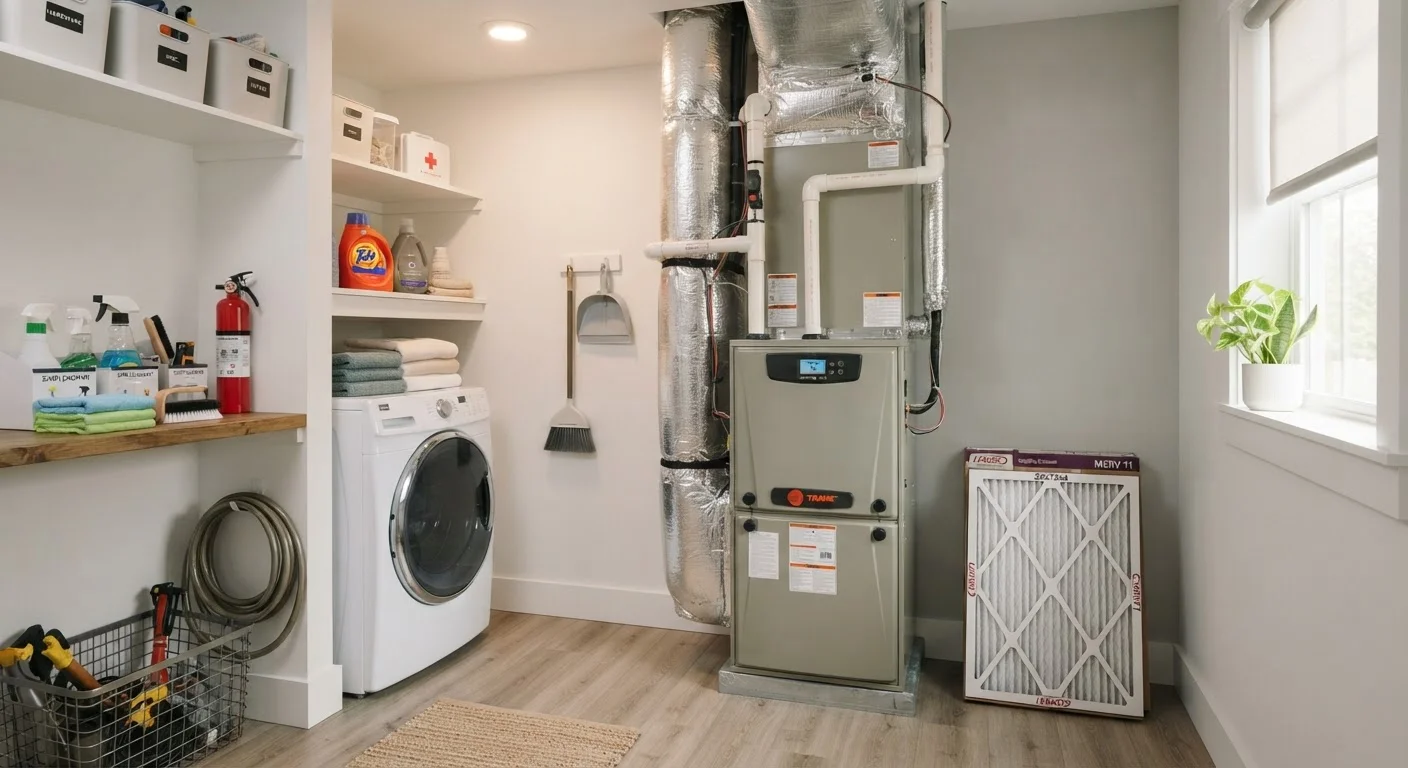
Replace or clean air filters every 1 to 3 months, depending on household conditions.
A clogged filter restricts airflow, forcing the blower motor to work harder and run longer to move the same volume of air. Over time, restricted airflow also causes the heat exchanger or evaporator coil to overheat or freeze, accelerating wear on expensive components.
Keep the outdoor condenser unit clear of at least 2 feet of open space on all sides.
The condenser needs to expel heat efficiently. Shrubs, fences, or debris piled against the unit trap heat and force the compressor to work against higher pressure, shortening its life.
Schedule a professional tune-up once a year, ideally before peak season.
A technician will check refrigerant charge, inspect electrical connections, clean the coils, and measure system pressures. Catching a small refrigerant leak or a loose wire early prevents failures that can cost several times the tune-up price.
Seal drafts around windows, doors, and penetrations to reduce runtime.
Every hour the system runs is wear on motors, compressors, and electrical contacts. A well-sealed home reaches the thermostat setpoint faster and cycles less frequently, directly reducing cumulative operating hours.
Use a programmable or smart thermostat to avoid unnecessary runtime.
Setting the system back when the house is empty or everyone is asleep reduces operating hours without sacrificing comfort. Fewer hours of operation directly translates to slower wear on all mechanical parts.
Clean the evaporator coil and condensate drain line annually.
A dirty evaporator coil loses heat transfer efficiency, causing the system to run longer. A clogged condensate drain can cause water backup, potential mold growth, and in some systems, a safety shutoff that triggers service calls.
For context on how a leaky, poorly insulated home forces an HVAC system to run longer cycles, see how insulation, air sealing, and attic ventilation work together. Reducing the load on the equipment is as important as maintaining the equipment itself.
Quick actions you can take this week
Some of the highest-impact steps take under 30 minutes. If your system has not had attention recently, start here.
These small investments in time fit into any household routine. Families who treat HVAC care like any other recurring home task, similar to the way smart family living habits frame consistent, low-effort upkeep, tend to avoid the large, unexpected repair costs that catch others off guard. Deferred HVAC maintenance is also one of the hidden household costs that quietly drain family budgets.