

Key Takeaways
Lower cost on simple, contained repairs
Parts for common fixes like fill valves, faucet cartridges, and supply line connections are inexpensive. Skipping the service call fee alone can save $100 or more on routine jobs.
Same-day resolution for minor issues
A homeowner with the right part can fix a running toilet or a dripping faucet without waiting days for a non-emergency plumber appointment.
Builds useful working knowledge of your system
Completing small repairs gives you a clearer picture of how your home's plumbing is laid out, which helps with faster diagnosis and more accurate descriptions when calling a professional.
No scheduling dependency for low-stakes jobs
For repairs that do not require a permit or specialized equipment, you control the timeline and can address problems before they worsen.
Hidden leaks can cause disproportionate damage
A loose compression fitting or an improperly seated supply line can drip inside a cabinet or wall for weeks. By the time it is noticed, mold or structural rot may already require professional remediation.
Misdiagnosis leads to repeat or worsened problems
Persistent clogs, slow drains, or pressure drops often have underlying causes that are not visible from the fixture. Treating the surface symptom without identifying the root issue frequently means the problem returns.
Permits and code compliance are real obligations
Unpermitted plumbing work can complicate a home sale, affect insurance coverage for related water damage, and require costly removal and reinspection if flagged by a building inspector.
Specialty tools add up for one-time jobs
Some repairs require tools like basin wrenches, pipe threaders, or soldering equipment that are expensive to buy for a single use. Forgetting to account for tool cost can erase the expected savings.
Older homes present material hazards
Homes built before 1986 may contain lead solder or deteriorating galvanized pipe. Disturbing these materials without proper knowledge poses health risks and may cause additional damage.
Our Verdict
DIY plumbing is a reasonable choice for contained, low-pressure jobs where the consequences of an error are minor and reversible. It is not a good fit for work inside walls, at main supply lines, or anywhere a mistake could saturate structure or violate local code. The savings are real on the right jobs; the losses can be steep on the wrong ones.
Homeowners who are comfortable reading instructions carefully, have basic mechanical aptitude, and can correctly identify which category their repair falls into before starting.
What counts as a DIY plumbing job
Not all plumbing work sits at the same difficulty level. Repairs divide roughly into two groups: fixture-level work and system-level work.
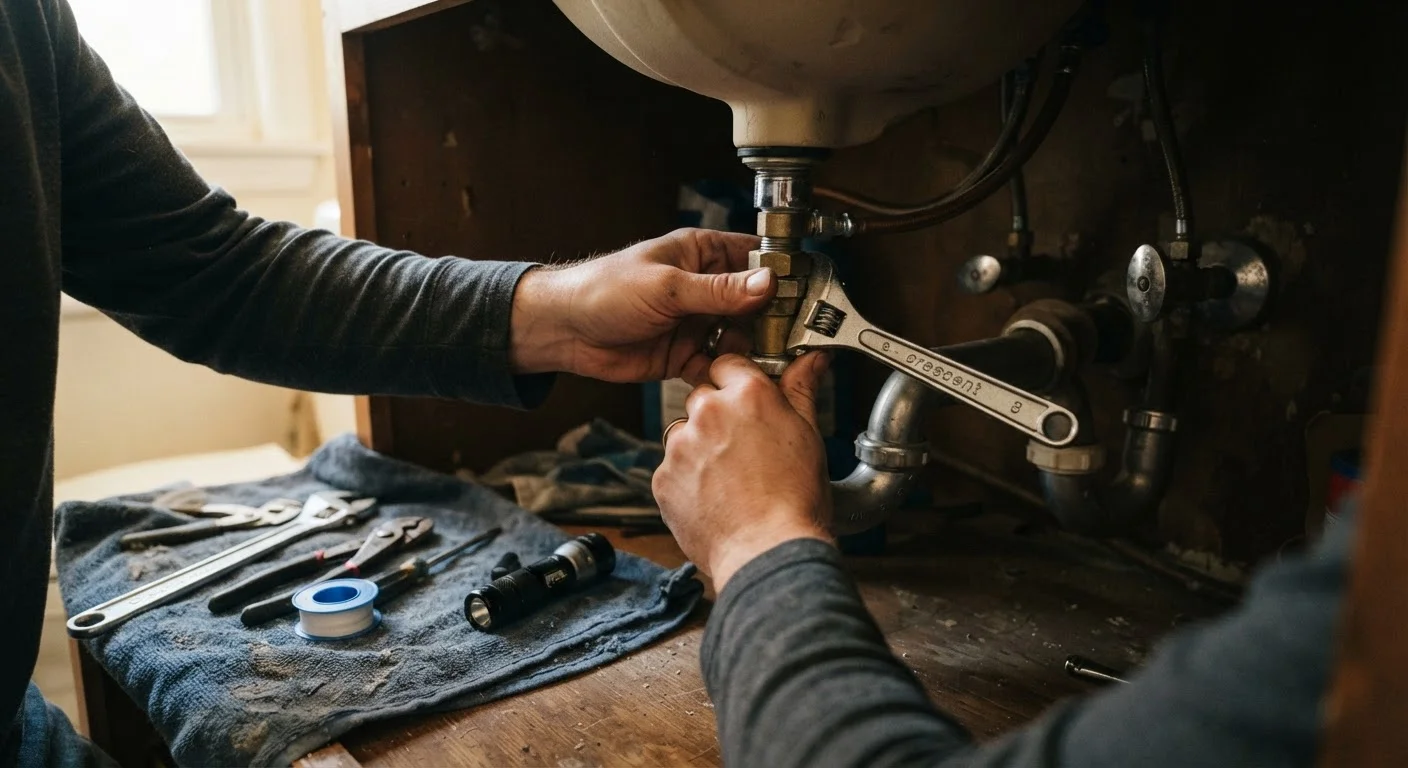
Fixture-level jobs involve components that attach to the existing supply or drain system without altering it. Swapping a showerhead, replacing a fill valve inside a toilet tank, fixing a dripping faucet cartridge, or clearing a clogged P-trap all fall here. These tasks use hand tools, require no permits in most localities, and carry low consequences if something goes slightly wrong.
System-level work touches the supply lines behind walls, re-routes drain pipes, or connects to the main stack. This work typically requires permits, inspections, and in many states a licensed plumber. Before starting anything, confirm your local requirements with your municipality's building department.
Before any repair, locate your shut-off valves. The guide to your home's water shut-off points explains where to find every valve so you can cut the water quickly if something goes wrong.
The real advantages of doing it yourself
Lower cost on simple, contained repairs
Parts for common fixes like fill valves, faucet cartridges, and supply line connections are inexpensive. Skipping the service call fee alone can save $100 or more on routine jobs.
Same-day resolution for minor issues
A homeowner with the right part can fix a running toilet or a dripping faucet without waiting days for a non-emergency plumber appointment.
Builds useful working knowledge of your system
Completing small repairs gives you a clearer picture of how your home's plumbing is laid out, which helps with faster diagnosis and more accurate descriptions when calling a professional.
No scheduling dependency for low-stakes jobs
For repairs that do not require a permit or specialized equipment, you control the timeline and can address problems before they worsen.
The cost savings on simple fixes are genuine. A plumber's service call alone can run $100 to $200 before any labor, and a straightforward faucet cartridge replacement might take a professional 20 minutes once on-site. The same job done yourself costs the price of the part, often $10 to $30.
There is also a practical knowledge payoff. Homeowners who do their own small repairs develop a working understanding of how their plumbing is laid out, which makes future problems easier to diagnose and describe accurately, whether they handle the next one personally or call a pro.
Scheduling is another factor. A plumber may not be available for several days on a non-emergency call. A homeowner with the right part and a clear afternoon can resolve a running toilet or a leaking supply line connection the same day they notice it.
For anyone comparing tool costs, renting versus buying tools for home projects is worth reviewing before purchasing specialty items like basin wrenches or pipe cutters you may only use once.
Where DIY plumbing creates real risk
Hidden leaks can cause disproportionate damage
A loose compression fitting or an improperly seated supply line can drip inside a cabinet or wall for weeks. By the time it is noticed, mold or structural rot may already require professional remediation.
Misdiagnosis leads to repeat or worsened problems
Persistent clogs, slow drains, or pressure drops often have underlying causes that are not visible from the fixture. Treating the surface symptom without identifying the root issue frequently means the problem returns.
Permits and code compliance are real obligations
Unpermitted plumbing work can complicate a home sale, affect insurance coverage for related water damage, and require costly removal and reinspection if flagged by a building inspector.
Specialty tools add up for one-time jobs
Some repairs require tools like basin wrenches, pipe threaders, or soldering equipment that are expensive to buy for a single use. Forgetting to account for tool cost can erase the expected savings.
Older homes present material hazards
Homes built before 1986 may contain lead solder or deteriorating galvanized pipe. Disturbing these materials without proper knowledge poses health risks and may cause additional damage.
The risks are not evenly distributed. A small error on a toilet fill valve wastes time; a small error on a compression fitting under a sink can drip unnoticed inside a cabinet for weeks, producing mold and rot that costs thousands to remediate.
Misidentifying a repair is common. A persistent drain clog may look like a simple blockage but actually indicate a venting problem or a partially collapsed line, both of which need professional diagnosis. Treating the symptom without finding the cause often means the problem returns or worsens.
Code compliance is a separate exposure. Work done without required permits can complicate a future home sale, void a homeowner's insurance claim related to water damage, or require costly tear-outs if an inspector flags unpermitted modifications.
Older homes and pipe materials
If your home was built before 1986, it may contain lead solder at copper pipe joints or original galvanized steel pipes. Both require caution before any repair that involves cutting, heating, or joining. Lead in plumbing is a health concern, and galvanized pipe that has deteriorated can flake debris into your water supply. Consult a licensed plumber before disturbing any pipe whose material you cannot confirm.
Lead and galvanized pipes add another layer of complexity for older homes. Disturbing lead-containing solder joints or deteriorating galvanized pipe without proper precautions poses health and structural risks. If your home was built before 1986, identify pipe materials before starting any repair that involves cutting or joining pipes.
Matching the job to your skill level
A practical framework: if you can describe the exact part that needs replacing, find it at a hardware store, and follow the manufacturer's installation instructions without improvising, the job is likely within reach. If the fix requires interpreting what is wrong before knowing what to do, that diagnostic step is where most DIY plumbing goes sideways.
Video walkthroughs and manufacturer instructions have made many repairs more accessible than they were a generation ago. Still, watching a repair is not the same as doing it. Start with the smallest version of a job first: replace one faucet before committing to re-doing all the fixtures in a bathroom.
For jobs involving supply lines inside walls, drain re-routing, water heater connections, or any gas-adjacent work, the right call is a licensed plumber. The permit and inspection process exists because water damage from improper work is expensive, sometimes not immediately visible, and occasionally dangerous.
Plumbing decisions follow the same logic as other home repairs. The breakdown of where to spend versus save on a room repaint applies a similar framework: identify where cutting corners costs more later and where it genuinely does not matter.
$150-$500
Typical plumber service call range
According to homeowner cost surveys, a standard plumbing service visit in the U.S. commonly runs between $150 and $500 depending on location, complexity, and whether the call is after-hours.
$10-$30
Average cost of common DIY plumbing parts
Parts for typical DIY-friendly repairs such as fill valves, faucet cartridges, and P-traps are widely available at hardware stores in this price range.