

Key Takeaways
Legumes (dried beans and lentils)
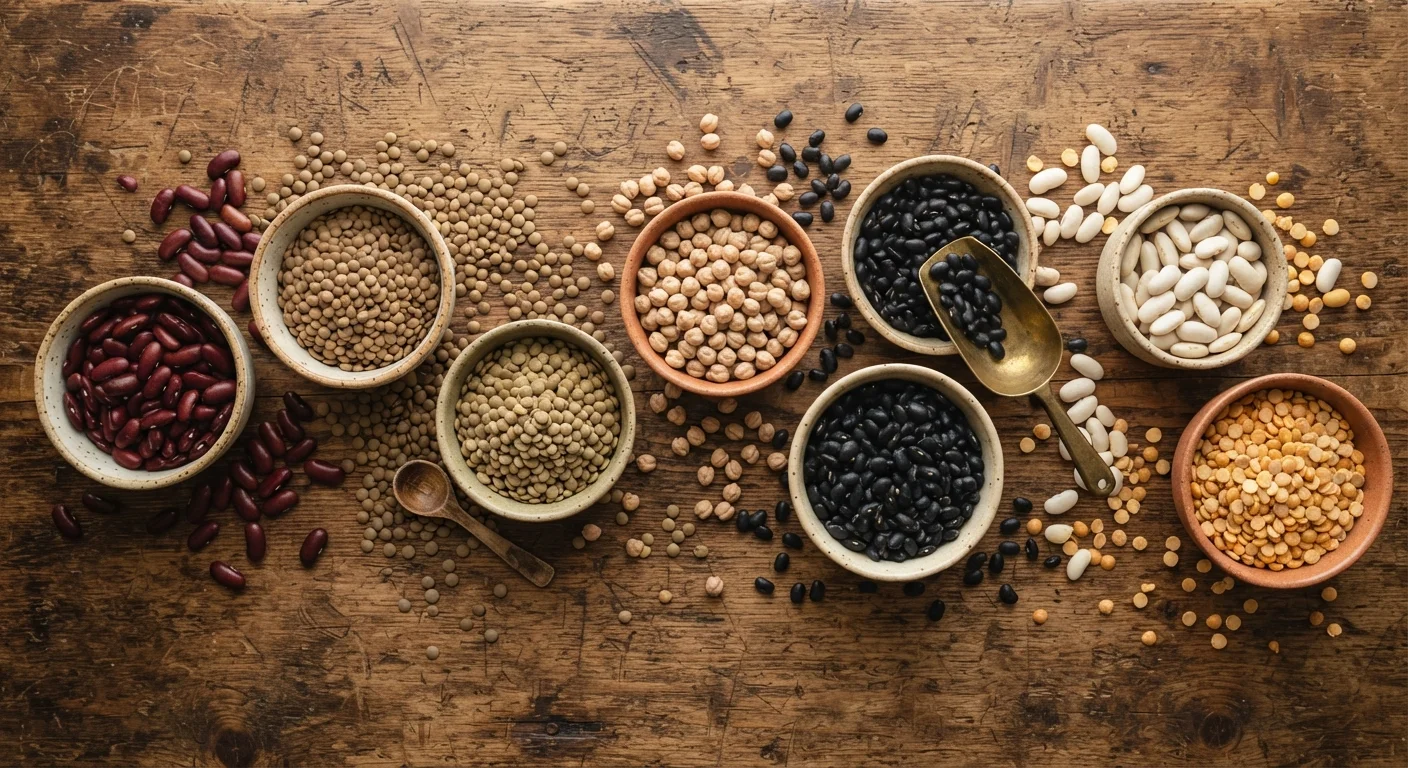
Legumes are the edible seeds of plants in the family Fabaceae. Dried beans and lentils are legumes that have been harvested and dehydrated for long-term storage. They are a concentrated source of plant protein, dietary fiber, and several important micronutrients. Unlike canned or fresh versions, dried legumes require soaking and cooking before eating.
Lentils are unique among common dried legumes because they do not require pre-soaking and cook in 20 to 30 minutes. Most dried beans need 6 to 8 hours of soaking followed by 1 to 2 hours of simmering.
What dried legumes actually cost per serving
A one-pound bag of dried lentils typically costs around $1.50 at most U.S. grocery stores. That pound yields approximately 12 half-cup cooked servings, putting the cost per serving at roughly 12 cents. Dried black beans, chickpeas, and pinto beans run slightly higher but still fall well under 25 cents per serving in most markets.
For a family of four eating legumes as the protein component of a meal, the total ingredient cost for that component is often less than $1.00. Compare that to a pound of ground beef or a package of chicken thighs, which typically cost several dollars for the same number of servings. The USDA Economic Research Service has consistently found dried beans among the least expensive sources of protein and dietary fiber in the American food supply.
This cost picture improves further when you account for shelf life. Dried legumes stored in a sealed container last one to two years with minimal quality loss, unlike fresh meat or produce. Buying in bulk when prices are low is a straightforward way to reduce per-serving costs further. For more context on where legumes fit within a broader strategy, see our household reference for affordable whole foods.
The nutritional profile families should know
One cooked cup of lentils contains approximately 18 grams of protein, 16 grams of dietary fiber, and meaningful amounts of iron, folate, potassium, and magnesium. Folate is particularly important during pregnancy and early childhood development. Iron from plant sources is less bioavailable than iron from meat, but eating legumes with a food high in vitamin C (such as tomatoes, bell peppers, or citrus juice) improves absorption.
Fiber content is one of legumes' standout qualities. The CDC notes that most Americans consume well below the recommended daily fiber intake. A single cup of cooked beans covers roughly half of an adult's daily fiber target. Fiber supports digestive health and helps maintain steady blood sugar levels after meals, which matters for families managing blood sugar through food choices.
~12 cents
Cost per serving of dried lentils
Based on a typical U.S. retail price of $1.50 per pound yielding approximately 12 cooked half-cup servings.
18g
Protein per cup of cooked lentils
Per USDA FoodData Central nutrient data for cooked lentils (1 cup / 198g).
16g
Dietary fiber per cup of cooked lentils
Per USDA FoodData Central; covers roughly half of an adult's recommended daily fiber intake.
~40%
Sodium reduction from rinsing canned beans
Cited in USDA dietary guidance and consumer food safety resources on sodium in canned legumes.
Legumes also contain resistant starch, a type of carbohydrate that passes through the small intestine undigested and feeds beneficial gut bacteria. This is an area of active nutrition research, and while findings are promising, no specific health outcome claims should be taken as established fact. Consulting a registered dietitian is the appropriate step for anyone with specific health conditions.
This article provides general nutrition information and is not medical advice. Speak with a qualified healthcare professional for guidance specific to your health needs.
Cooking dried legumes without hassle
Lentils are the most beginner-friendly legume because they skip the soaking step. Red lentils dissolve into soups and stews in about 20 minutes. Green and brown lentils hold their shape and work well in salads, grain bowls, and as a filling for tacos or wraps.
For dried beans, a basic approach works well. Cover the beans in cold water by at least two inches and soak for 6 to 8 hours or overnight. Drain and rinse, then simmer in fresh water until tender. Cooking time varies by bean type: black beans take about 60 to 90 minutes, chickpeas closer to 90 to 120 minutes. A pressure cooker or Instant Pot cuts these times significantly for families who cook frequently.
Batch cooking saves time and money
Cook a large quantity of dried beans on a weekend and freeze them in two-cup portions. Frozen cooked beans thaw quickly in the refrigerator overnight or in a saucepan with a small amount of water. This gives you the cost advantage of dried beans with the convenience of canned beans on busy nights.
Cooked beans freeze well in portioned containers. Cooking a large batch on a weekend and freezing in two-cup portions means weeknight meals require only thawing, not starting from scratch. This approach also makes legumes practical when time is limited.
Salt is best added after beans have fully softened. Adding salt too early can toughen the outer skin and extend cooking time.
How to work legumes into regular family meals
The most sustainable way to increase legume consumption is to substitute them partially or fully for meat in existing meals rather than learning entirely new recipes. Lentil bolognese, black bean tacos, chickpea curry, and white bean soup all follow familiar meal structures most families already use.
Legumes also stretch meat further. Adding a can of white beans or a cup of cooked lentils to a meat-based stew or chili increases volume, protein, and fiber while reducing the amount of meat needed per serving. This is a practical strategy for managing grocery costs without eliminating animal protein entirely.
The idea that healthy eating is inherently expensive is a common assumption worth questioning. Separating the myths from the reality about food costs often reveals that whole-food staples like legumes, oats, and cabbage are among the most nutrient-dense foods per dollar available. Dried beans and lentils sit at the top of that list by nearly any measure.