

Key Takeaways
Why popular destinations don't have to drain your budget
America's most-visited places carry a reputation for being expensive, and some of that reputation is earned. Theme park tickets, hotel parking fees, and overpriced food near major attractions can add up fast. But the same cities and landscapes that draw millions of visitors each year also contain a large number of activities that cost nothing or close to nothing, and those options tend to be overlooked precisely because they don't show up in the sponsored travel content families encounter first.
This list covers specific, practical activities at real destinations. Each entry explains what you get, what it costs, and what to watch for so you can plan with accurate expectations. For a broader look at managing the costs that catch families off guard, see what families often overlook when budgeting for a vacation.
The Smithsonian museums in Washington, D.C.
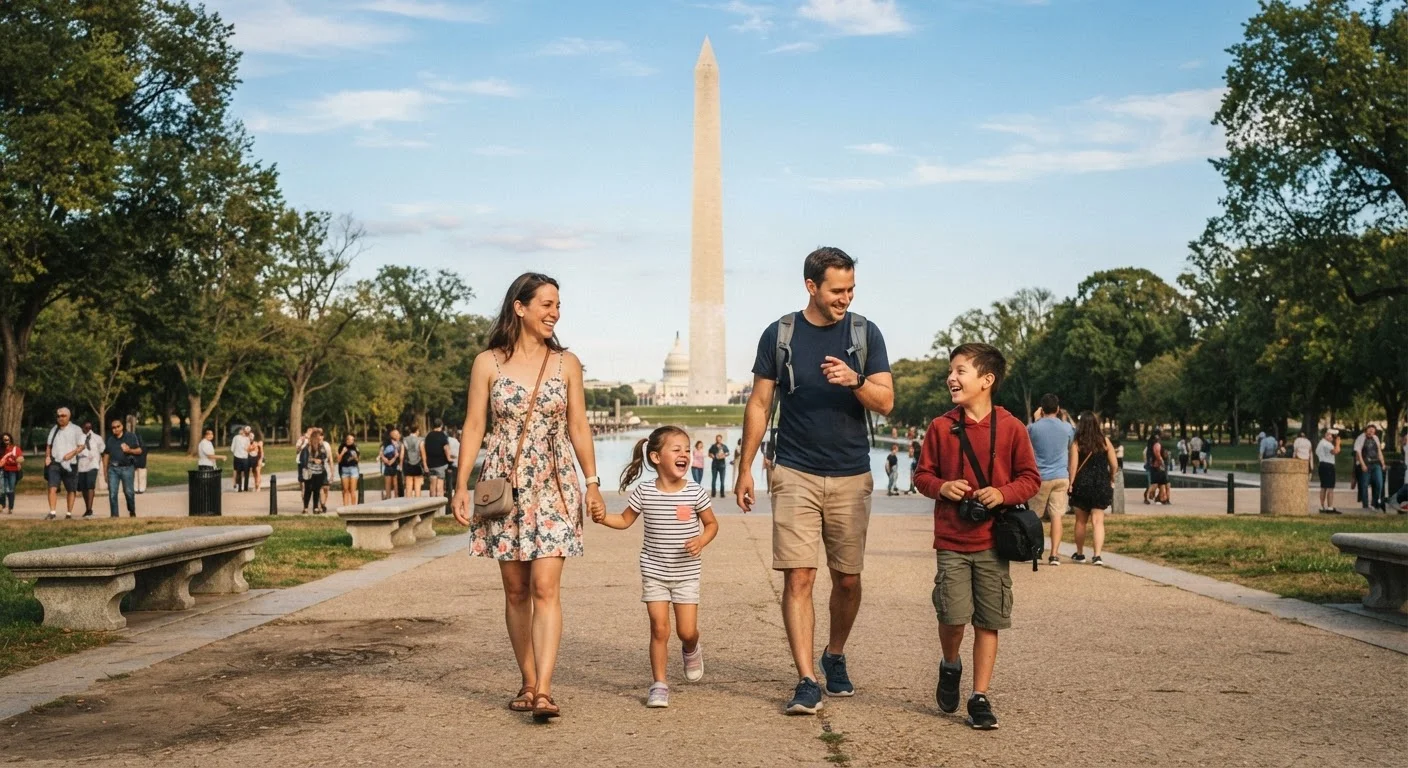
The Smithsonian Institution operates 19 museums and galleries in Washington, D.C., and all of them are free to enter. The National Museum of Natural History, the National Air and Space Museum, the National Zoo, and the National Museum of American History are among the most visited, and none charge admission. Combined with the National Mall, the Lincoln Memorial, the Vietnam Veterans Memorial, and the other monuments accessible on foot, a family can fill three or four full days in D.C. without paying a single entry fee.
What does cost money: parking near the Mall, food inside the museums, and souvenirs at gift shops. Packing lunch and using the Metro instead of driving removes most of those expenses. Timed-entry passes are required for some exhibits and can be reserved online at no charge; checking availability before arrival avoids disappointment.
All 19 Smithsonian museums in D.C. charge no admission, making multiple full days of activity genuinely free.
Ranger-led programs at national parks
Every national park with a visitor center offers ranger-led programs: guided hikes, campfire talks, and Junior Ranger activities for children. These are included in the park entry fee, which is already one of the lower per-person costs in travel (and free on designated fee-free days each year). The Junior Ranger program specifically gives children a structured booklet of activities tied to that park's ecology or history; completing it earns an official badge at no extra cost.
Grand Canyon, Yellowstone, Great Smoky Mountains, and Yosemite all run robust ranger program schedules during peak season. Great Smoky Mountains is the country's most visited national park and charges no entry fee at all, making it one of the strongest value propositions in American travel. For permit and fee planning across multiple parks, this guide to national parks for families covers the specifics.
Great Smoky Mountains charges no entry fee and runs free ranger programs, making it exceptionally cost-effective for families.
Free beach access in Miami and along the Florida coast
Miami Beach and most of Florida's public coastline are accessible at no charge. The state maintains hundreds of miles of public beach access points, and while some state parks along the coast charge a vehicle entry fee (generally under $10 per carload), stretches like South Beach in Miami, Clearwater Beach, and St. Augustine Beach are publicly accessible without any fee. Spending a full day at the beach with packed food and drinks from a grocery store costs a family almost nothing beyond transportation.
The main expenses to manage: paid parking in Miami Beach, which can run $3 to $5 per hour in peak season, and beach equipment rentals. Street parking further from the main corridors and walking to the beach cuts the parking cost significantly. Arriving before 9 a.m. also tends to free up metered spots before the peak demand period.
Florida's public beaches are free to access, and managing parking strategically removes most of the day's cost.
Golden Gate Park in San Francisco
Golden Gate Park spans over 1,000 acres in San Francisco and contains the free portions of multiple attractions. The park itself, its trails, and its gardens are accessible without charge. The California Academy of Sciences and the de Young Museum sit inside the park and do charge admission, but free museum days are offered periodically, and checking the schedule before a trip can align your visit with one. The Japanese Tea Garden charges a small entry fee on most days but waives it on certain weekday mornings.
Families can spend a full day in the park between the trails, the Bison Paddock (which has had free roaming bison since the 1890s), and Stow Lake. San Francisco's public transit connects directly to the park, which avoids the parking challenges the area presents. For families planning a broader West Coast road trip, road trip budget strategies can help structure the driving legs cost-effectively.
Golden Gate Park offers more than 1,000 acres of free outdoor space, trails, and animal viewing in the middle of San Francisco.
Historic neighborhoods and public markets
Several of America's most visited cities have historic neighborhoods or public markets where walking, exploring, and people-watching costs nothing. Boston's Freedom Trail is a 2.5-mile marked walking route past 16 historic sites, many of them free to enter, including the Boston Common, Paul Revere's House, and the Old South Meeting House (some charge a small fee). New Orleans' French Quarter is walkable and free to explore; the food, music, and architecture are the attraction, not ticketed venues. Pike Place Market in Seattle is a working public market where watching vendors, sampling free tastings, and walking the waterfront costs nothing.
The trap to avoid at all three locations is the pressure to purchase at every stop. Setting a clear daily discretionary spending limit before arrival keeps the experience in budget without eliminating all spontaneity.
Boston's Freedom Trail, New Orleans' French Quarter, and Seattle's Pike Place Market are all free to walk and explore.
Free days at major art museums
Many of the country's most respected art museums offer free admission on a regular schedule. The Art Institute of Chicago is free for Illinois residents under 14 and for Chicago residents on select days. The Los Angeles County Museum of Art (LACMA) has free admission after 3 p.m. on weekdays for L.A. County residents. The Museum of Fine Arts in Boston offers free admission to Massachusetts residents on certain evenings. The Metropolitan Museum of Art in New York City has a suggested donation model, meaning the listed ticket price is not mandatory, though the museum encourages contribution.
These schedules change, so verifying current hours and eligibility requirements directly with each museum's website before visiting is necessary. Calling ahead or checking the official site the week before your trip is more reliable than relying on third-party listings.
Multiple major art museums nationwide offer free or pay-what-you-wish admission on regular schedules worth checking in advance.
How to get more from these destinations
A few planning habits apply across all of these locations. Timing matters: shoulder season travel at destinations like San Francisco or Washington, D.C. means shorter lines, lower accommodation rates, and the same free activities. Checking a destination's official municipal or park website before arrival usually surfaces free event calendars that aren't publicized elsewhere. If your trip involves a national park, the full guide to national parks as family destinations covers fee structures, free-entry days, and permit logistics in detail.
Families building an itinerary from scratch will also find it useful to work through the pre-booking checklist for budget-conscious families before locking in any reservations. Many of the activities in this list also double as physical activity for the whole family, which connects naturally to the broader idea of staying active without a gym membership.
Check municipal event calendars before you go
Most large American cities publish free event listings through their official parks and recreation departments. These calendars often include outdoor concerts, festivals, and community events that don't appear on travel sites. Searching '[city name] parks and recreation events' a week before your trip typically surfaces options that are both free and local in character.