

Key Takeaways
No monthly loan payment
A paid-off vehicle eliminates the largest single transportation expense for most households, freeing several hundred dollars per month regardless of repair frequency.
Depreciation losses are largely behind you
Vehicles over seven years old lose value slowly. Buying a newer vehicle restarts the steepest part of the depreciation curve, often costing thousands in lost equity within the first two years.
Lower insurance premiums in many cases
Older vehicles with lower market values often qualify for liability-only coverage, while a financed replacement typically requires comprehensive and collision coverage, raising annual premiums noticeably.
Repair costs are usually predictable
A vehicle with a known service history allows a mechanic to identify upcoming maintenance needs, making budgeting more manageable than absorbing a new loan and unknown issues simultaneously.
Repair bills can cluster unexpectedly
Aging vehicles sometimes require multiple repairs within a short window as systems wear out together, making a single bad year look worse than the long-term average would suggest.
Fuel economy may lag significantly
Older powertrains were designed under different efficiency standards, and a meaningful mpg gap between an aging vehicle and a newer replacement adds up to hundreds of dollars annually at typical driving volumes.
Safety technology gaps are real
Vehicles manufactured before modern driver-assistance systems became standard lack automatic emergency braking, lane-departure warnings, and blind-spot monitoring, which insurance actuaries increasingly factor into risk assessments.
Reliability uncertainty rises with age
Even a well-maintained vehicle faces higher statistical failure rates for components like water pumps, timing belts, and seals after 150,000 miles, which can affect dependability for commuting households.
Our Verdict
Keeping a high-mileage vehicle is financially sound for most families as long as annual repair costs stay well below what a replacement loan would cost. The break-even point shifts when major systems fail repeatedly or when a newer vehicle offers meaningfully lower fuel and insurance costs. Running the actual numbers for your specific situation will produce a clearer answer than mileage alone.
Families with a paid-off vehicle in generally good mechanical condition who want to minimize monthly transportation costs and avoid taking on new debt.
Why mileage alone is a poor decision trigger
Many families treat 100,000 miles as a psychological threshold, assuming a car is on borrowed time beyond that point. In practice, mileage is one data point, not a verdict. A well-maintained vehicle with 130,000 miles on a documented service history can be far more reliable than a lightly driven car that missed oil changes for years.
The more useful frame is total cost of ownership going forward. That means adding up what you expect to spend on repairs, insurance, fuel, and registration for the vehicle you already own, then comparing it honestly against the full cost of acquiring something newer. Hidden ownership expenses like title fees, dealer markups, and increased insurance premiums on a newer model are easy to overlook in that comparison.
The financial case for keeping the car
No monthly loan payment
A paid-off vehicle eliminates the largest single transportation expense for most households, freeing several hundred dollars per month regardless of repair frequency.
Depreciation losses are largely behind you
Vehicles over seven years old lose value slowly. Buying a newer vehicle restarts the steepest part of the depreciation curve, often costing thousands in lost equity within the first two years.
Lower insurance premiums in many cases
Older vehicles with lower market values often qualify for liability-only coverage, while a financed replacement typically requires comprehensive and collision coverage, raising annual premiums noticeably.
Repair costs are usually predictable
A vehicle with a known service history allows a mechanic to identify upcoming maintenance needs, making budgeting more manageable than absorbing a new loan and unknown issues simultaneously.
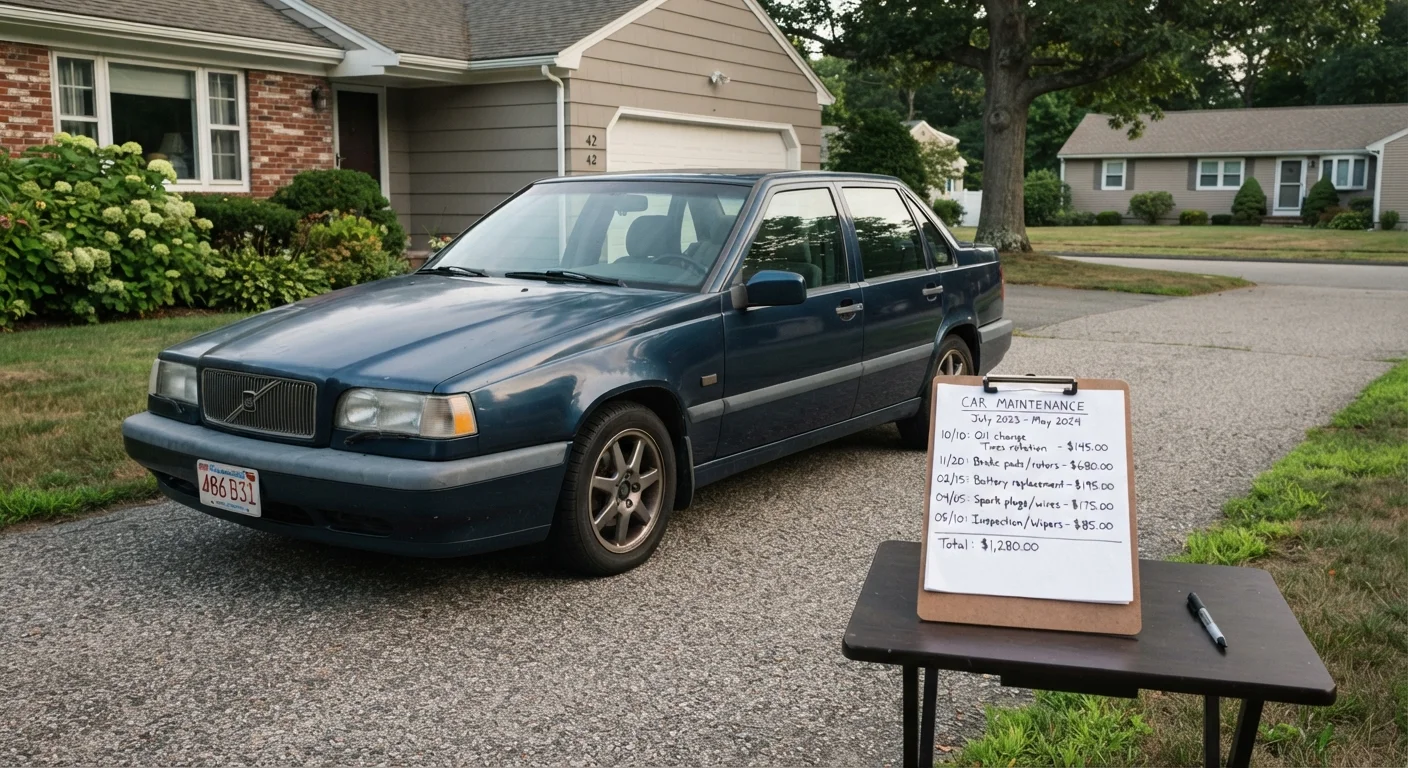
The single largest cost advantage of keeping an older vehicle is the absence of a loan payment. A typical used-car loan in the United States carries a payment between $400 and $550 per month depending on the loan term and interest rate. Even a year with $3,000 in repairs costs less than 12 months of those payments, and most high-mileage cars do not require $3,000 in repairs every year.
Depreciation also works in your favor when you hold. A car that has already shed 60 to 70 percent of its original value loses relatively little additional value each year. Trading in and buying a newer vehicle restarts the depreciation clock at a point where losses are steepest. Our car depreciation breakdown explains why those early years are the most expensive ones to own.
$12,000+
Average annual cost to own a new vehicle
AAA's vehicle ownership cost studies have consistently placed the total annual cost of owning a new vehicle above $12,000 when factoring in depreciation, financing, insurance, fuel, and maintenance.
49%
Value lost in first three years of ownership
Industry tracking data indicates the average new vehicle loses roughly half its value within the first three years, with the sharpest drops occurring in year one and year two.
$3,000
Approximate annual repair threshold for older cars
Financial planning guidelines generally suggest trading in becomes worth serious consideration when annual repair costs consistently exceed what a year of loan payments on a comparable replacement would cost.
The financial case for trading in
Repair bills can cluster unexpectedly
Aging vehicles sometimes require multiple repairs within a short window as systems wear out together, making a single bad year look worse than the long-term average would suggest.
Fuel economy may lag significantly
Older powertrains were designed under different efficiency standards, and a meaningful mpg gap between an aging vehicle and a newer replacement adds up to hundreds of dollars annually at typical driving volumes.
Safety technology gaps are real
Vehicles manufactured before modern driver-assistance systems became standard lack automatic emergency braking, lane-departure warnings, and blind-spot monitoring, which insurance actuaries increasingly factor into risk assessments.
Reliability uncertainty rises with age
Even a well-maintained vehicle faces higher statistical failure rates for components like water pumps, timing belts, and seals after 150,000 miles, which can affect dependability for commuting households.
Keeping a car is not always the rational choice. When a vehicle requires repeated repairs on major systems, like the transmission, engine, or suspension, cumulative costs can approach or exceed the car's actual market value. At that point, money spent on repairs generates diminishing returns because each fix does not eliminate the risk of the next one.
Fuel economy is a factor that compounds quietly over time. A vehicle averaging 20 miles per gallon versus a replacement averaging 32 mpg represents a meaningful annual gap. Our article on lifetime fuel costs walks through how to calculate that difference in real dollars based on your annual mileage and local gas prices.
Running the actual numbers
A straightforward comparison works like this. Take your estimated annual repair and maintenance spending on the current vehicle, then add insurance and registration. Do the same calculation for a potential replacement: loan payments, higher insurance on the newer vehicle, registration on a higher assessed value, and any financing charges. The gap between those two totals is the real cost of switching.
Repair estimates are available from independent mechanics before committing to a decision. A pre-purchase inspection on a potential replacement, typically $100 to $150, can also surface problems that would not show up on a test drive. Common car cost myths include the belief that newer vehicles are always cheaper to maintain, which independent data does not consistently support, especially in the first three years of a new loan.
What a mechanic's assessment can tell you
Before deciding, a trusted independent mechanic can inspect your current vehicle and provide a written estimate of repairs likely needed in the next 12 to 24 months. This single step converts vague reliability anxiety into a concrete cost figure you can plug into your comparison. Most inspections cost between $80 and $150 and take less than two hours.
For families weighing a lease as an alternative to buying, the cost structure differs significantly. Leasing versus buying covers how monthly payments, mileage caps, and end-of-term costs compare across those two paths.