

Key Takeaways
Car depreciation
Car depreciation is the loss in a vehicle's market value over time. Every car is worth less the moment it leaves the dealership lot, and that gap between what you paid and what you could sell it for widens each year. Depreciation is not a fee you pay to anyone; it is the portion of your purchase price you cannot recover when you eventually sell or trade in the vehicle.
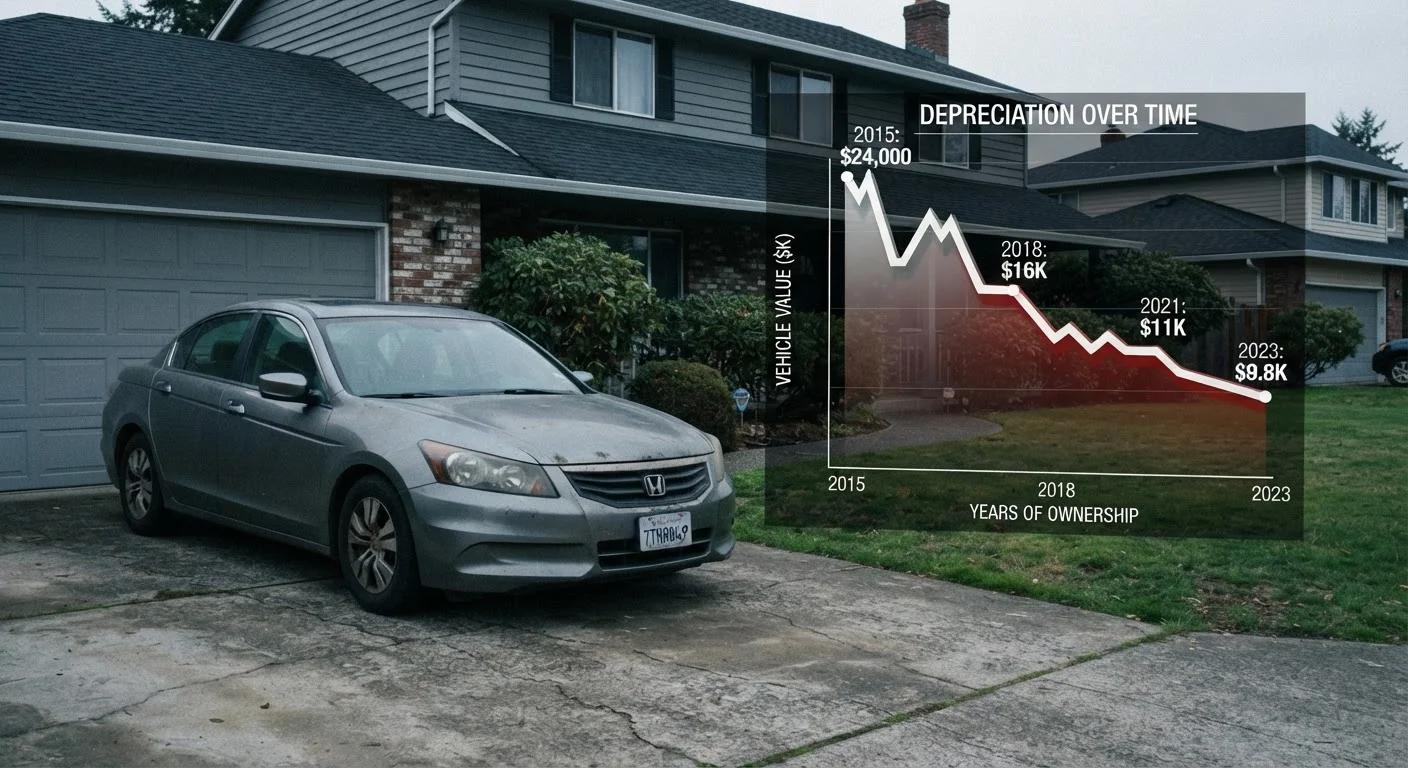
In accounting terms, depreciation follows an accelerated curve: the steepest losses occur in the first two to three years, making it a front-loaded cost of ownership rather than an even annual expense.
Why cars lose value from day one
The moment a new car is registered and driven off a lot, it becomes a used vehicle in the eyes of the market. Buyers willing to pay full price for a new car want exactly that: new. A car with even a few hundred miles on it competes with other used inventory, and that shift in perception alone can shave several thousand dollars off its value immediately.
Beyond perception, several structural forces drive ongoing depreciation. New models arrive each year with updated features, which makes older versions less desirable. Consumer tastes shift, affecting demand for certain body styles and fuel types. And the longer a vehicle is in use, the closer it gets to needing major maintenance items like timing belts, brake systems, or transmission service, all of which reduce what a buyer will pay.
This is why depreciation is not a steady, predictable line. It follows a curve that drops steeply at first, then flattens. Most of the total loss in value happens within the first three years. After that, the pace slows considerably. For families budgeting around a vehicle purchase, this curve has real dollar consequences.
The factors that accelerate or slow depreciation
Several variables determine how fast a specific vehicle loses value, and understanding them helps at both the point of purchase and when it is time to sell.
Mileage
Higher mileage signals more wear to potential buyers, even if the vehicle is in excellent mechanical condition. A car driven 20,000 miles per year will generally be worth less than a comparable car driven 12,000 miles per year at the same age.
Condition and maintenance history
Vehicles with documented service records, no accident history, and clean interiors command higher resale prices. A minor collision, even if professionally repaired, typically lowers resale value because it appears on vehicle history reports that buyers routinely check.
Brand and model reputation
Some brands carry stronger resale value because buyers associate them with reliability or low long-term costs. Models known for expensive repairs or poor fuel economy tend to depreciate faster. This is one area where common ownership cost assumptions can mislead families: a lower purchase price does not always mean lower total cost if depreciation is steep.
Fuel type and market trends
Shifts in fuel prices or consumer sentiment around gasoline versus electric vehicles can move resale values quickly. A large SUV that was in strong demand one year may depreciate faster the next if fuel prices rise sharply.
20%
Average first-year value loss for a new vehicle
Industry estimates from automotive valuation guides consistently place first-year depreciation for a typical new car between 15 and 25 percent of the original purchase price.
~50%
Typical value remaining after five years
Across most vehicle categories, a car retains roughly 40 to 60 percent of its original value after five years, depending on make, model, mileage, and condition.
$17,000+
Average depreciation on a $35,000 vehicle over 5 years
Using a 50 percent depreciation rate, a vehicle purchased at $35,000 loses approximately $17,500 in value over five years, a figure that rivals or exceeds total fuel spending over the same period.
What depreciation actually costs your budget
Most vehicle cost discussions focus on the monthly payment, but the payment only covers financing. Depreciation is a separate, parallel cost that does not show up on any statement. To see it, compare what you paid for a vehicle against what you could sell it for today. That gap, divided by the months you have owned it, is your monthly depreciation cost.
On a $35,000 vehicle that loses 50 percent of its value over five years, the depreciation cost alone is roughly $291 per month before a single dollar of interest, fuel, or insurance is counted. For context, that figure often exceeds what many families spend on fuel in the same period. The total cost of fuel over a vehicle's lifetime is a major expense, but depreciation frequently outpaces it.
Depreciation also matters when financing. Buyers who put little money down on a new vehicle can end up "underwater" on the loan, meaning they owe more than the car is worth. This is a real financial risk if the vehicle is totaled or needs to be sold before the loan is paid off. The hidden costs of vehicle ownership article covers gap insurance in more detail, which addresses exactly this scenario.
How depreciation changes the math on buying versus leasing
Depreciation is central to how lease payments are calculated. A lease payment is essentially the cost of the vehicle's depreciation during the lease term, plus financing charges. When a vehicle holds its value well, lease payments tend to be lower because the leased portion represents a smaller percentage of the purchase price.
For buyers, understanding depreciation shifts the calculus on when to buy. A vehicle that is two to three years old has already absorbed its steepest value drop, so the buyer pays less and faces a slower depreciation curve from that point forward. The trade-off is a shorter remaining warranty, potentially fewer financing options, and unknown prior use. A full breakdown of these trade-offs is in our leasing versus buying financial comparison.
For families who are new to vehicle ownership, the car ownership costs starter guide puts depreciation in context alongside insurance, registration, and maintenance so you can see the full picture before committing to a purchase.
This article is for general informational purposes only and does not constitute financial or legal advice. Consult a qualified financial professional for guidance specific to your situation.