

Key Takeaways
Household budget
A household budget is a plan that lists how much money a family expects to receive and how they intend to spend or save it over a set period, typically one month. It shows income on one side and expenses on the other, so families can see whether they are spending more, less, or exactly what they earn. The goal is not perfection but awareness: knowing where the money goes before it disappears.
In personal finance, a household budget functions as a cash-flow plan. It can be structured as a zero-based budget (every dollar assigned a purpose), a percentage-based framework such as the 50/30/20 guideline, or a simpler income-minus-expenses ledger.
What a household budget actually is
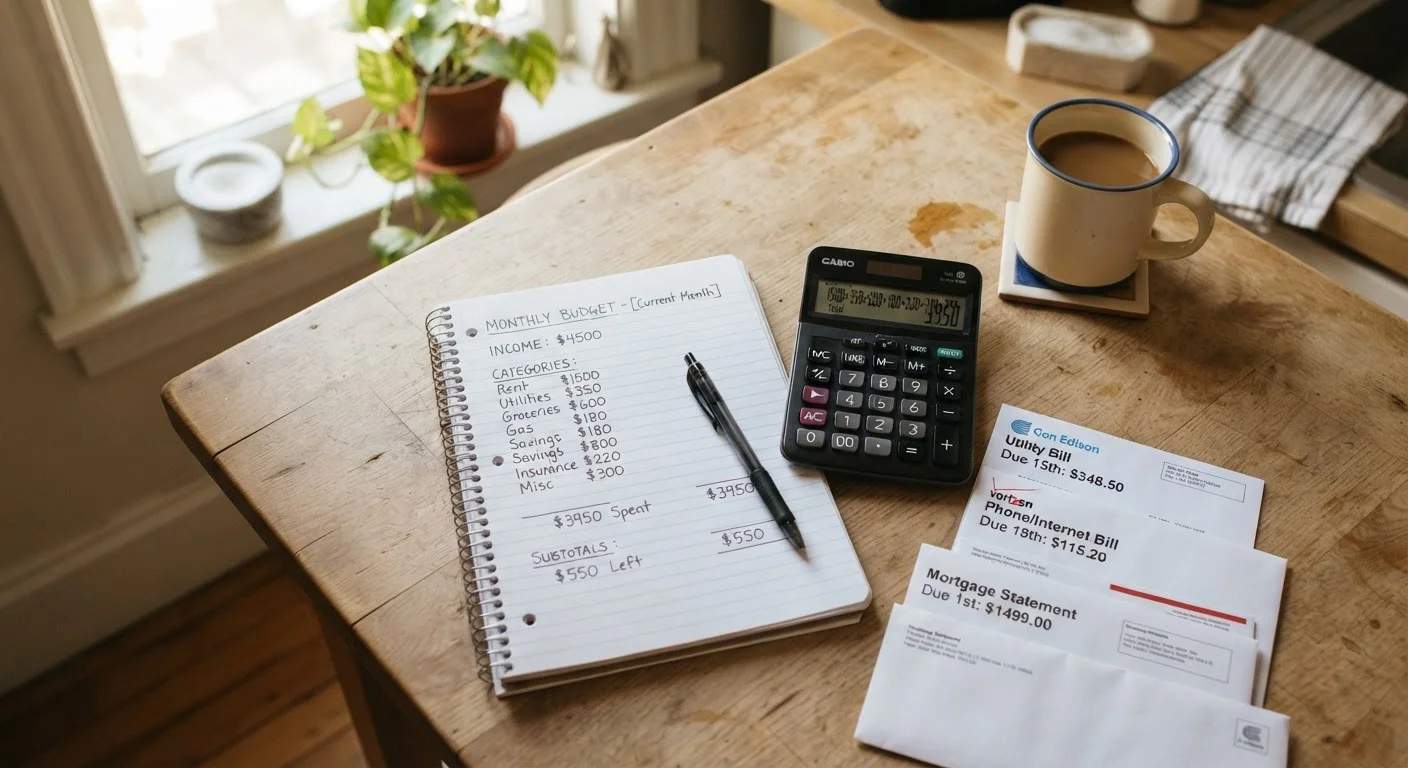
Strip away the jargon and a household budget is a simple document or spreadsheet with two columns: money coming in and money going out. Income from jobs, freelance work, government assistance, or any other source goes on one side. Rent or mortgage payments, groceries, utilities, car payments, insurance, and every other regular cost go on the other. When those two sides are compared, a family can see their financial position clearly.
That clarity is the point. A budget does not restrict spending by magic. It shows what is already happening so a family can decide whether they want it to keep happening. Without that picture, spending tends to drift, and many families reach the end of a month unsure where hundreds of dollars went.
The Consumer Financial Protection Bureau describes a budget as a tool to help people stay on top of bills, save for goals, and avoid debt. That framing matters: a budget is a tool, not a punishment.
Start with one month of real numbers
Before deciding on a budget format or method, pull three months of bank and credit card statements and add up what was actually spent by category. Real numbers, not estimates, make a budget accurate from the start. This step takes about an hour and prevents the most common budgeting mistake: planning around what you think you spend rather than what you actually spend.
The two types of expenses every budget includes
Every household expense falls into one of two categories. Fixed expenses are the same amount each month: a mortgage payment, a car loan, a fixed-rate insurance premium. They are predictable and easy to plan around. Variable expenses change from month to month: groceries, gas, utility bills, dining out, clothing. These are where most families encounter surprise shortfalls.
Variable expenses are not bad. They are simply less predictable, which means they need more attention in a budget. Families who track their variable spending for two or three months usually find the real numbers are higher than their estimates. That gap between estimate and reality is one of the most common reasons budgets feel like they "don't work."
For a detailed breakdown with everyday examples, see our guide to fixed and variable expenses.
Why most families are surprised by their own numbers
Most people carry a rough mental model of their spending. The problem is that mental model rarely accounts for irregular expenses: the car registration fee, the annual subscription renewals, the back-to-school costs in August, the holiday spending in December. These costs are real and recurring, but because they do not appear every month, they tend to be left out of informal mental budgets.
When a family sits down and maps actual spending, the results are often different from the mental model. Where family money actually goes each month covers this in detail and is worth reading before building a first budget.
There are also hidden costs that fall outside the usual budget categories entirely. Subscription creep, deferred home maintenance, and small recurring fees add up across a year. Hidden household costs families consistently underestimate walks through the most common ones.
~$73,000
Median annual household expenditure in the US
According to the Bureau of Labor Statistics Consumer Expenditure Survey, the average US household spent approximately $73,000 in 2022, with housing, transportation, and food making up the largest shares.
33%
Share of households with no monthly budget
A 2023 NFCC (National Foundation for Credit Counseling) survey found roughly one in three American adults reported not using any kind of budget to manage their spending.
What a household budget is not
A budget is not a sign that a family is in financial trouble. Families at every income level use budgets, including those who earn well above the national median. A budget is also not a static document: it should be updated when income changes, a new expense appears, or a financial goal shifts.
A budget is not the same as an emergency fund, though the two work together. A budget manages the flow of regular income and expenses. An emergency fund is a separate pool of money set aside for unexpected costs like a medical bill or car repair. Building that fund is easier once a budget shows how much money is available each month to set aside. For more on that topic, see our guide to household emergency funds.
A budget is also not a one-size-fits-all format. A family with three young children, a mortgage, and one income earner has different categories than a two-income household with older teens. The structure should reflect actual life, not a generic template.
A practical starting point
Starting a budget does not require software or a financial adviser. A sheet of paper divided into income and expense columns works. The first step is writing down every source of income for one month, after taxes. The second step is listing every known expense for that same month, including an estimate for variable costs based on recent bank or credit card statements.
Subtracting total expenses from total income produces a number. A positive number means there is money available to save or direct toward a goal. A negative number means current spending exceeds income, and some expense needs to be reduced or income needs to increase. Neither result is a verdict; both are information.
Families who want to stretch their dollar further across other areas of life will find broader strategies at Smart Family Living. For health-related spending, Healthy on a Budget covers accessible wellness habits that fit within a household plan.
This article is for general informational and educational purposes only and does not constitute personalized financial advice. Consult a qualified financial professional for guidance specific to your situation.